
The Tea You Never Brewed
On Creative Gifts That Stay Hidden

Moldy Tea
Last week, a typhoon rolled through Taiwan.
That means a lot more moisture and a lot less sunshine. I kept all the windows and doors shut and hunkered down. The rain lingered for a few days, but the wind wasn’t as bad as we were anticipating.
If you’ve ever lived in a humid climate, you know this is the recipe for mold.
Sure enough, I started noticing little white fuzz on pieces of wood and fabric around the apartment. Knife handle. Braided cotton bracelet. Bucket hat.
This was alarming, but since East Hawai’i is also prone to mold, I knew the drill—seek and destroy what’s popped up and buy a dehumidifier to prevent it happening again.
Over the weekend we got some sunny days and I opened back up to get some fresh air and a cross breeze. I thought, “This is the perfect time for a little afternoon tea session.”
A couple months back I took a trip to Yilan and visited a tea shop well known for their wild harvest puer tea. The Taiwanese owner, Chuang, goes to Yunnan every year to select the best teas for processing to bring back to his shop in Taiwan. I picked up a small brick of 2019 Sheng Puer.
I was saving it for a moment like this—a free and open afternoon with beautiful weather.
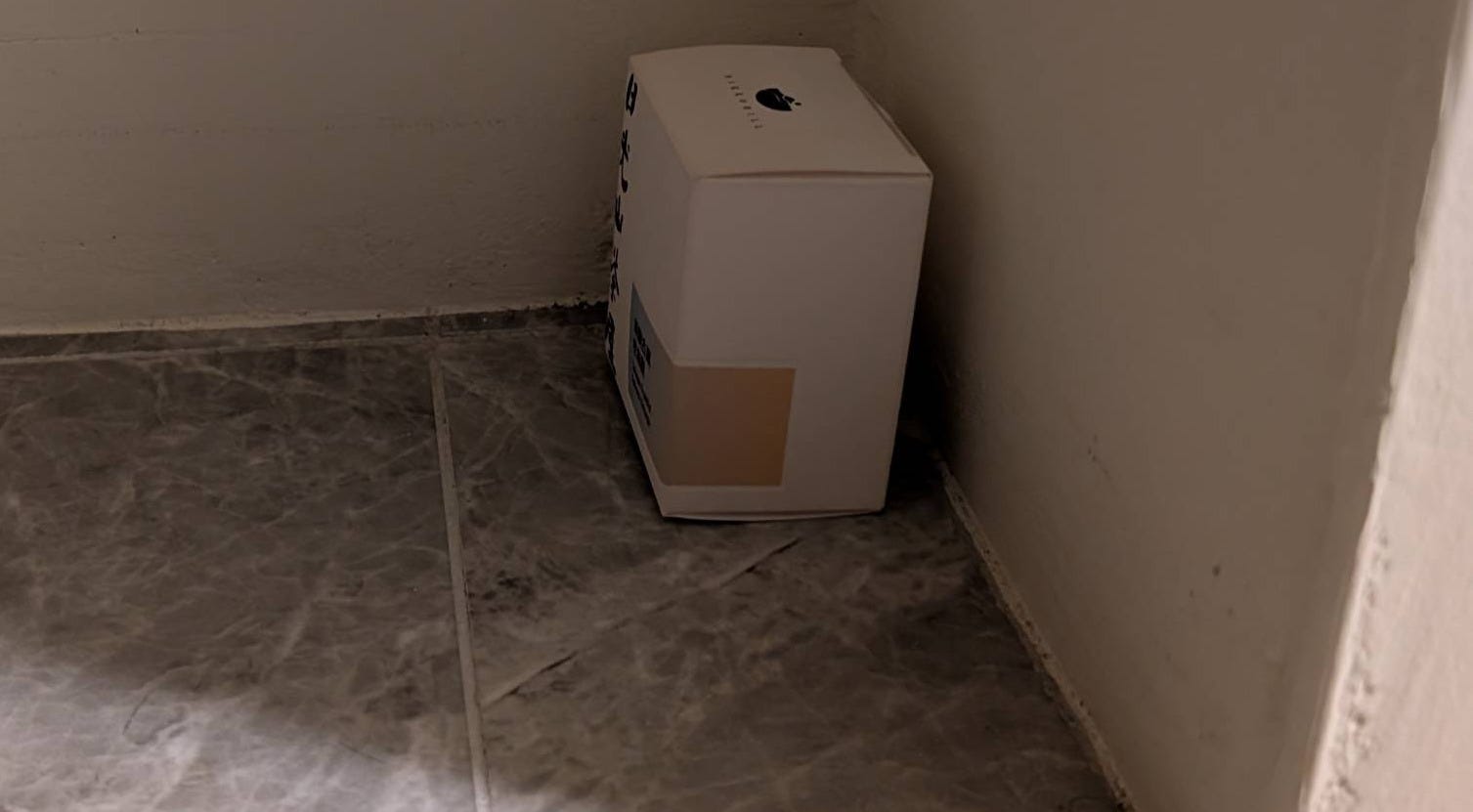
I reached for the little paper box in my closet, excited to break off a piece while I was heating up my gaiwan.
My heart dropped.
You’ve probably guessed where this is going by now.
The horror!
Humidity is the enemy of tea storage. The familiar white fuzz was all over the top of the small brick of tea.
I was waiting for the right vibe that matched the tea. When that vibe finally came… the tea—the beautiful and rare blessing—would never be what it could have been.
Thinking of all the hard work that went into the making of the tea, only for it to get moldy, saddened me.
This is what you are doing with that idea.
You know exactly which idea I’m talking about!
That idea that’s been floating around in the back of your mind. How long has it been there without you taking action?
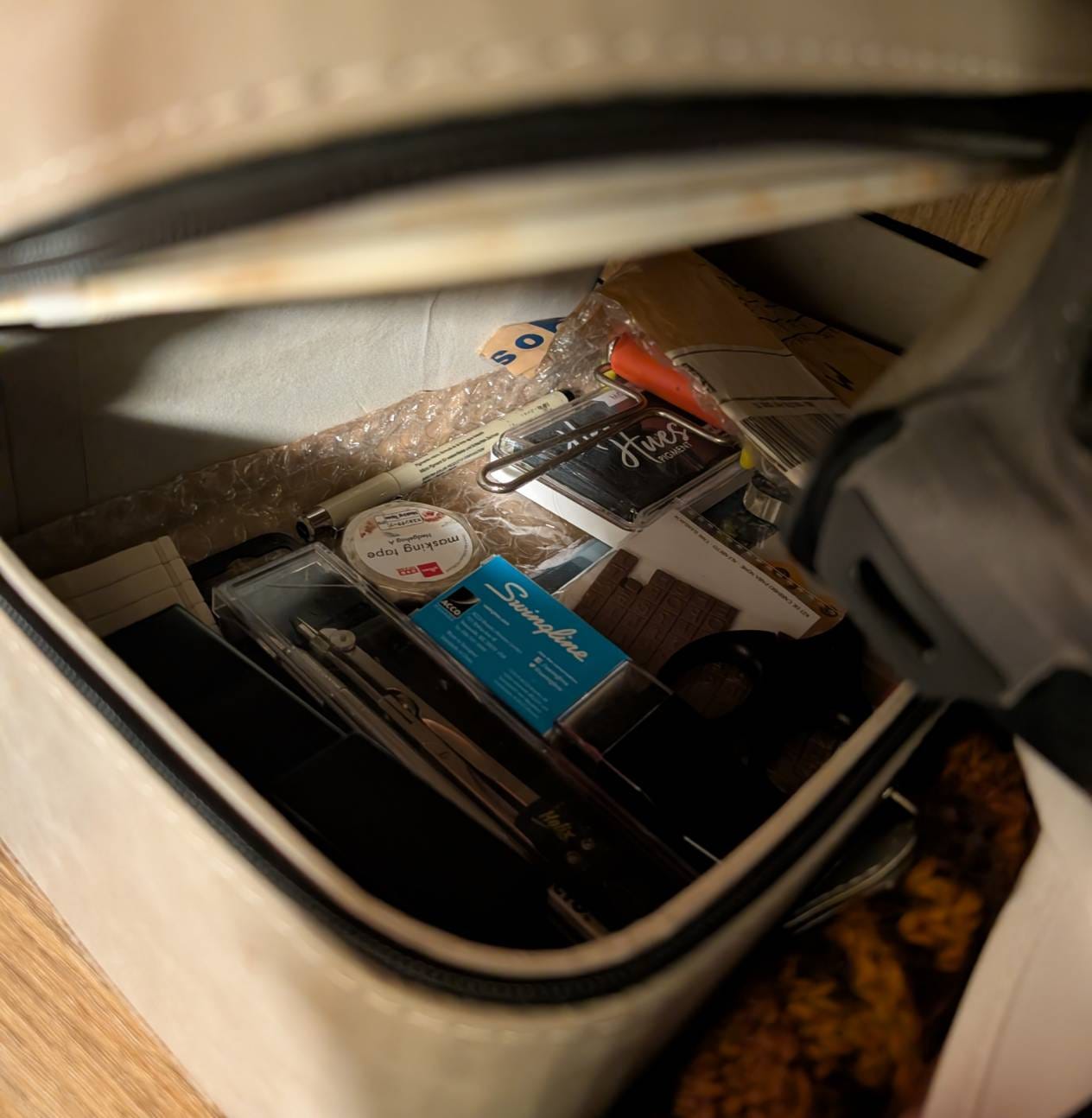
The Secret Box of Ideas in Your Heart
If you have one, I know you have more than one.
There is a whole box of ideas that have found their way into your mind. They want to use you to express themselves into physical reality, but you are too busy staying at low vibration telling them that they aren’t realistic.
Let It Out
You keep them there in the back of your mind in a box labeled “some day.”
The story that explains the dream you had that one time.
The painting of the vision that popped into your head when you were deep in thought one day.
The song that spontaneously burst forth from your mouth on a long drive.
The poem that formed while you were cleaning one day and you scratched it down on a paper that you threw into the drawer.
The electric jolt of inspiration that takes over your senses and makes you grab the pen or just plain start talking to yourself. The flow of thought that feels like you are channeling another world.
It’s not that you don’t know what to create—you have a stockpile of ideas.
It’s the fact that you know exactly what you want to do that makes not creating it so painful.
You’re Fooling Yourself
You list off reasons rationalizing why you shouldn’t start your creative pursuit yet. All an elaborate ruse to avoid confronting the truth.
You’re afraid.
Nobody will like it
I’ve got better things to do
Once I do this one thing, then I’ll be ready
I’m not the kind of person that…
I need to study more about it first
It’s not your fault.
Your mind is trying to protect you from potential failure or rejection. These aren’t lies—that’s why they feel so believable. But they are covering up the root of why you aren’t taking action.
The Truth
When you think up all of these reasons to refrain from taking action, what you’re really saying is:
“If I create this thing, I’ll have to share it. If I share it, I’ll be visible. If I’m visible, I’ll be a target.”
Are you really afraid of failing, or are you afraid of being successful?
If you are successful, then your identity is more public than before. What if those people who don’t know you misunderstand your message? When more people know you, they might be envious of your success and send judgment your way.
I understand this fear intimately.
In my early twenties, I spent years playing guitar and writing songs in private. The thought of sharing it with other people made my chest tight. I remember thinking, “What if I mess up? What if people don’t think I’m good? They will judge me and I’ll be so vulnerable. I can’t hide how much I care about these songs.”
So we keep it safe and hidden away.
We tell ourselves we’re not ready yet.
But here’s what nobody tells you about keeping your creative gifts hidden:
Conditioned To Hide
You weren’t born afraid to create.
You learned it.
Think about it. When you were a little kid, you just expressed whatever your imagination could think up without fear of judgment. You said things were things that they weren’t. You pretended to be a particular job or even an animal. Maybe you even sang your own songs.
All with such admirable confidence.
The Moments That Taught You
Something happened.
It stung at the time, but you didn’t think much of it. Little did you know, it would plant a seed that would never stop growing.
Your teacher told you your interpretation of a story was wrong
Your friend called your drawing stupid
You were told “be more realistic” when you shared your dream
The culture as a whole tamped down your creativity and pushed you into a box
These little moments you pushed aside have been accumulating in a corner of your mind like a dust bunny. Their voices echo in moments of silence: “Creativity is risky.” “It’s safer to conform.” “Keep those weird ideas to yourself.”
That sparkling wonder and freedom of childhood has been covered in the grime of projected expectations from authority figures.
Internalized Censorship
The echoes have reverberated for so long that you no longer recognize them as internal influences—you hear them as your voice now.
You no longer need someone else to tell you to be more realistic and to fit in the box. You embody it now. You are your own strictest critic.
The “Nobody will like this” and the “Creativity is for kids. I’m an adult now and I have to pay bills” sounds like you, but it’s not.
It’s a mimicked belief that you listened to for so long, you lost track of your true voice.
I remember when I got my first apartment and I was suddenly inspired to use the extra space to paint a big painting. I bought a 3 foot by 4 foot canvas and some acrylic paint. The vision was a tortoise climbing a ladder through outer space.
I told myself that I didn’t have the skills yet, that I needed to practice smaller paintings first, and that other people weren’t going to like it.
So I got some other smaller canvases and did some other paintings. Then I got a big sketch pad to draft up the big painting… then I started thinking about how long it would take to finish the actual painting.
That was around 12 years ago.
That canvas still remains blank.
I’ve moved on and I’ve gone onto other creative pursuits. The truth remains: that painting is still unrealized not because someone else told me not to do it, but because I stopped myself.
I’ve come around to the perspective that it’s not my fault.
And your blocks aren’t your fault.
We were just protecting ourselves. The problem is, the protection that kept you safe as a child is now keeping you from your real work.
The Cost of the Unbrewed Tea
What happens when you keep the good tea in a box in the closet? Or when we keep our creative gifts locked away?
Let me tell you what I’ve observed in myself and in others I’ve had deep conversations with.
The Psychological Cost
1. Persistent sense of something missingEven when everything is going well, there’s this persistent sense that you need to be doing something.
2. Low-grade depression or anxietyNot in a clinical sense. It’s a welling up of creative energy inside that, with no release, looks for an escape by gnawing away at its captor.
3. Resentment towards others who createIt’s like the armchair Olympian mindset. You look at others’ work and say, “They’re not even good.” Meanwhile, you haven’t created a thing.
4. Numbing behaviorsScrolling, binge-watching, overworking, substances—anything to drown out that voice asking you to nurture your creativity.
5. White Rabbit SyndromeYou haven’t written off those creative projects, but you also haven’t started. With each passing year the intensity of “running out of time” grows.
The Physical Cost
The open loop of “I’m an artist, just not yet” in the mind creates these mental states of suffering listed above. The discomfort doesn’t end with the mind, however.
The mind interfaces with the body through the nervous system and stores these psychological costs as somatic manifestations.
Mind precedes all mental states. Mind is their chief; they are all mind-wrought. If with an impure mind a person speaks or acts suffering follows him like the wheel that follows the foot of the ox.
Mind precedes all mental states. Mind is their chief; they are all mind-wrought. If with a pure mind a person speaks or acts happiness follows him like his never-departing shadow.
—Dhammapada
You may notice tension in the following areas:
Neck and shoulders — from unfulfilled ideas
Chest and heart — from closing yourself off from your true passion or sharing it with the world
Throat and jaw — from holding back your true artistic expression
Hips and lower back — from stagnation of creative energy

This section may be the hardest to accept. I know I viewed somatic manifestations with skepticism when I first heard about them.
My mind changed when I remembered a time when I finally shared some of my guitar songs with a friend for the first time. I remember feeling a slight pain in my chest as the tension released from keeping this passion of mine a secret.
My understanding deepened as I developed my meditation practice. When I truly relax, I can see that when I thought I was relaxed before, I was still carrying tension. This somatic manifestation concept is one of the unspoken truths of the Vipassana body scan meditation technique.
Please, don’t take my word for it—go see for yourself. One of the best ways to dive deep with understanding this is to go to one of the 10-day silent retreats hosted around the world.
The Spiritual Cost
This is the deepest cost of all. It is the compounding of the psychological and physical impacts.
Imposter syndrome consumes you—the kind that makes you feel like an imposter in your own skin. You become so unaligned with your authentic self that you can’t even trust the few people who try to be friends with you.
“I don’t even like who I am. Why would they?”
The longer you wait, the more the loneliness and grief grow.
“What if I die before I create that thing?” overpowers the voice that says “What if you just start now?”
You embody the unpainted canvas.
You embody the moldy tea.
What you need to realize is this:
The saddest thing isn’t creating something and potentially being rejected.
The saddest thing is never even creating that thing at all.
Get It Out—But Not ‘Out There’ (Yet)
The solution: create!
You don’t have to make a masterpiece overnight and put it out for everyone to see.
Just start creating, and keep creating. Whatever calls to you in whatever way it calls to you.
This is where most advice about creativity misses the mark. They say:
Find your audience
Build in public
Just put it out there
But what if the first step isn’t sharing it with the world?
What if the first step is sharing it with yourself?
Permission to Create in Private
You need to validate what you create with yourself first.
Recognize that what you create has value even if nobody else ever sees it. Creating in private is not less real than creating publicly.
Paint your pictures. Write your stories or songs. Keep creating with no judgment and eventually you will make something that makes you say, “I want to share this with someone.”
That’s how you’ll know you’re ready.
Emily Dickinson wrote 1,800 poems. Vincent Van Gogh painted 2,100 paintings. Now they’re recognized among the greatest at their art.
At the time, they were focused on creating.
The practice itself is where the true value is. Consistency with the practice is how skills improve and make space for the confidence to share.
The advantage we have over Dickinson and Van Gogh is that we have the internet and a longer life expectancy. When you finally make something you want to share, it is much easier to show it to the world.
Brew The Tea
If it helps, you can view the creative act as a meditation or a unique type of journaling—it’s for your personal development first and foremost.
Returning to the tea metaphor we can frame it this way:
Open the tea container = acknowledge what wants to be created
Prepare the water = prepare the conditions for creative work
Steep the leaves = participate in the creative act
Taste the tea = take a step back and appreciate what you created
An invitation:
What if this week, you didn’t worry about writing a whole novel?
What if you wrote one page, for yourself, and no one else?
What if you didn’t plan an entire graphic novel?
What if you drew one sketch, and put it in a file?
What if you brewed the tea you’ve been saving, just to see what it tastes like?
Listening for What Wants to Be Created
Now, I’ll share a practice I use when I need to hear what’s trying to come through to me.
It’s a tea meditation coupled with reflective listening—the same principles I wrote about in The Ancient Art of Being Heard, adapted for artistic inspiration.
The Practice
What you’ll need:
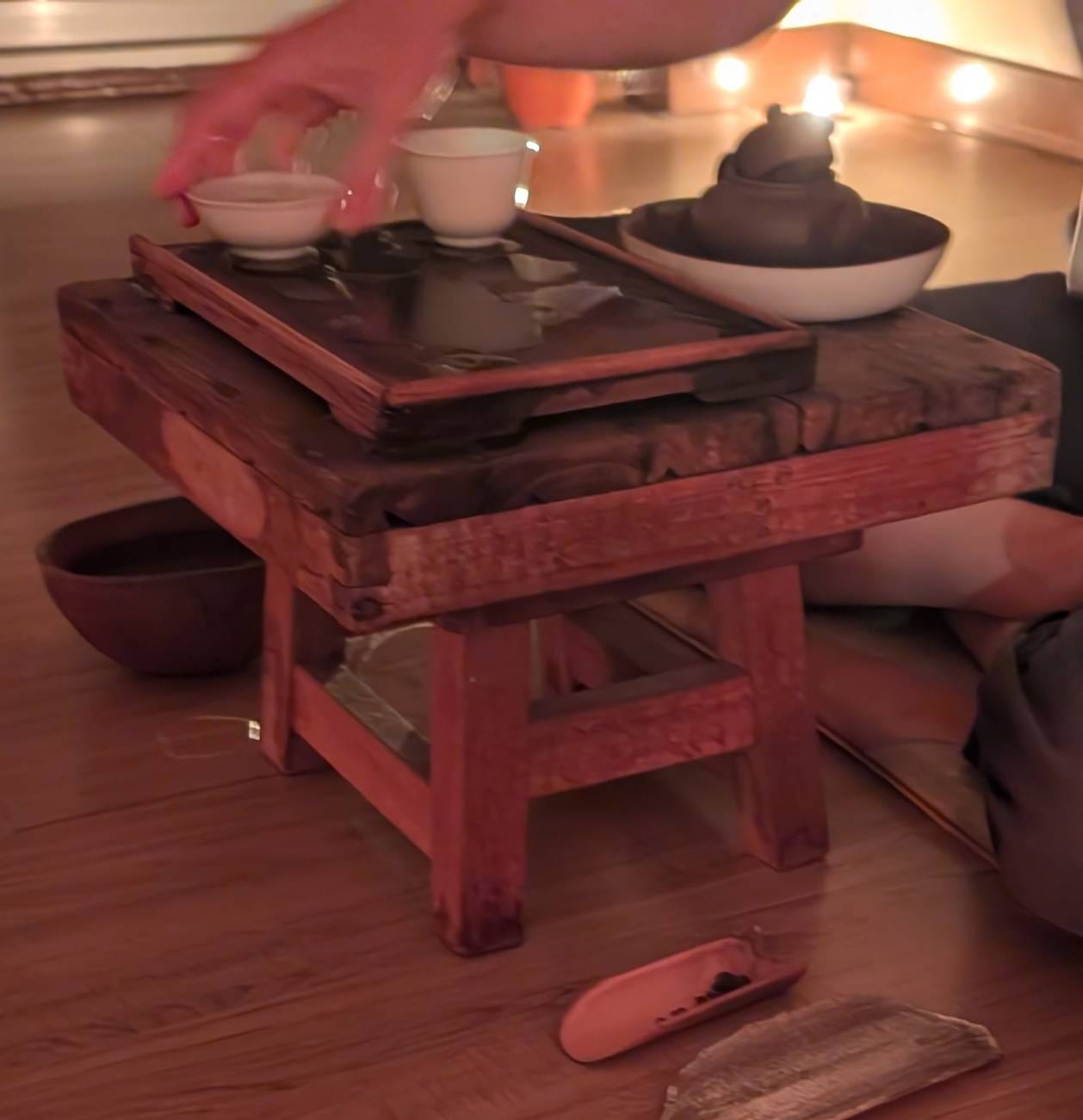
Tea (loose leaf suggested), a way to brew it, a quiet place, around 30 minutes, and a notebook, sketchpad, paints, a musical instrument, or whatever your form of expression is for the day.
Steps:
Slowly and mindfully prepare your tea — pay careful attention, one movement at a time
Sit with the cup — tune into the world of subtle sensations: the warmth, the aroma, the sounds
Take three deep breaths — bring that awareness into your body
Ask yourself — either internally or aloud, “What wants to be created through me?”
Wait and observe — keep your senses tuned inward
Notice what arises — no expectations. It can be words, images, feelings, memories, sounds, whatever
Create without editing — whichever form you’re using, remember it’s for you only
Honor what came — whatever the size and clarity may be
What’s next?
Nothing.
You don’t need to turn this into a project or polish it up. The purpose of this practice is to give yourself permission to create for the sake of creating. Listening to your inner voice. Acknowledging the mystery of inspiration.
Brewing the tea instead of leaving it to mold in the box.
Journey of 1,000 Miles…
Now, you’re probably thinking, “How am I supposed to transition to an artistic career, if I’m just creating and keeping it to myself?”
Remember: You’re putting in the reps. It’s a long journey from silence to recognized voice.
Keep listening to your own true inner voice, and don’t let it get pushed aside by the voices online shouting: “Do it scared!” or “Post every step on social media!”
Most of that productivity advice doesn’t work for the creative journey. It skips over the bridge and jumps into the stream. Tapping into instinct and grasping at rocks and branches to get to the other side might work for the entrepreneur.
For artists, there’s a bridge.
It’s the space where you learn to hear yourself before you ask others to hear you.
It’s where you strengthen and trust your inner knowing.
It’s where you discover your authentic voice, separate from the frameworks and how others have done it.
This bridge is sacred, and it requires a specific kind of space.
Deep Listening Sessions
This is why I created Authentic Heart Resonance Tune-up sessions.
Not as coaching. Not as advice-giving. But as held space for you to hear yourself think.
The same way the tea ceremony creates conditions for deep listening, these sessions create conditions for you to listen to your own creative voice—without pressure, without agenda, without anyone telling you what you ‘should’ do.
What Makes It Different
It’s not about building your platform or marketing strategy
It’s about the act of creating: clarity about what wants to come through you
It’s reflective self-discovery, not external direction
It’s the bridge between private creative work and eventual sharing
Who It’s For
These sessions are specifically for people who:
Have “that idea”, but can’t seem to find the “one day” when they’ll do it
Feel ready to move from a traditional job to making a living from their creativity
Are already making it as an artist, but have encountered a sudden block
Know they are artists, and need space to hear what wants to be created
Authentic Heart Resonance Tune-up
If this resonates, you can learn more [here] or DM me and tell me what tea you’ve been keeping in the box.
Sometimes naming it is the first step toward brewing it.
Invitation to Reflect
I offer you the following questions as an invitation to reflect. You can keep it to yourself (like in the tea meditation above). And if you’re inspired, it would help visibility of this post if you share in the comments what came up for you.
What is “that idea” that’s been sitting in a box in the corner of your mind?
How long have you been telling yourself you’ll create it “one day”?
Do you ever feel somatic manifestations?
What if you start small?
I’m genuinely curious how the idea of unbrewed tea resonates with you. I read and reply to every response.
Cutting Off the Mold
So there I was—I had just taken out the garbage and loaded up the washing machine—staring at the brick of moldy tea, thinking, “It would be a shame to let it go to waste.”
I took it into the sunlight for closer inspection, and it appeared the mold was just on the surface. So, I placed it on my cutting board, took out a sharp knife, and cut off the outer edges. After that, I let it sit in the sun for an hour or so.
(By the way, I don’t suggest that anyone copy what I did here.)
Later, I brewed some, and it was still good. Maybe it wasn’t as nice as it could have been if I wasn’t concerned about contamination in the back of my mind.
Enjoyable nonetheless.
As I drank, I reflected on this lesson: Waiting for the perfect moment is how we lose what matters most.
Now, that tea is in a plastic bag in a drawer in my desk so I can keep an eye on it. (Still no more mold.)
Next time I get some good tea, I’m going to brew some right away. Instead of waiting for the perfect moment that may never come.
Your creative gifts are the same.
They’re not meant to sit in the cool dark corner of your mind. Not meant to sit molding until the perfect opportunity, or just the right moment arises.
They’re meant to be brewed.
Tasted.
Experienced.
Even if only by you.
What tea will you brew this week?
The dry tea leaves are waiting at the bottom of the warm teapot. The water in the kettle is hot.
All that’s left to do is pour.
I love this post and I’ve been practicing doing some of the things that my dreams are made up of more and more lately, and it’s very very true how it can be that exposing feeling, or being seen by others that inhibits people for many years, it can be scary to truly be seen. It is definitely worth trying though, life is too short to not pursue dreams, and convincing others to pursue the same for themselves <3 ps. Sry to hear bout the tea going bad, mold was my arch nemesis living/traveling in the van
I love your writing. You’ve inspired me to steep a thought. ‘If how we do anything is how we do everything’, where else does this play out in our lives? Do we enjoy our own meals on the good china vs waiting to use it for company? Do we take enough pauses in our day to check out of auto pilot and appreciate with presence? Who are we being day to day?